
Dissolved oxygen (DO) is a critical operating parameter in aerobic wastewater treatment processes. In an aeration tank, microorganisms rely on sufficient oxygen to degrade organic pollutants efficiently. When dissolved oxygen remains too low for an extended period, a series of operational and treatment problems may occur.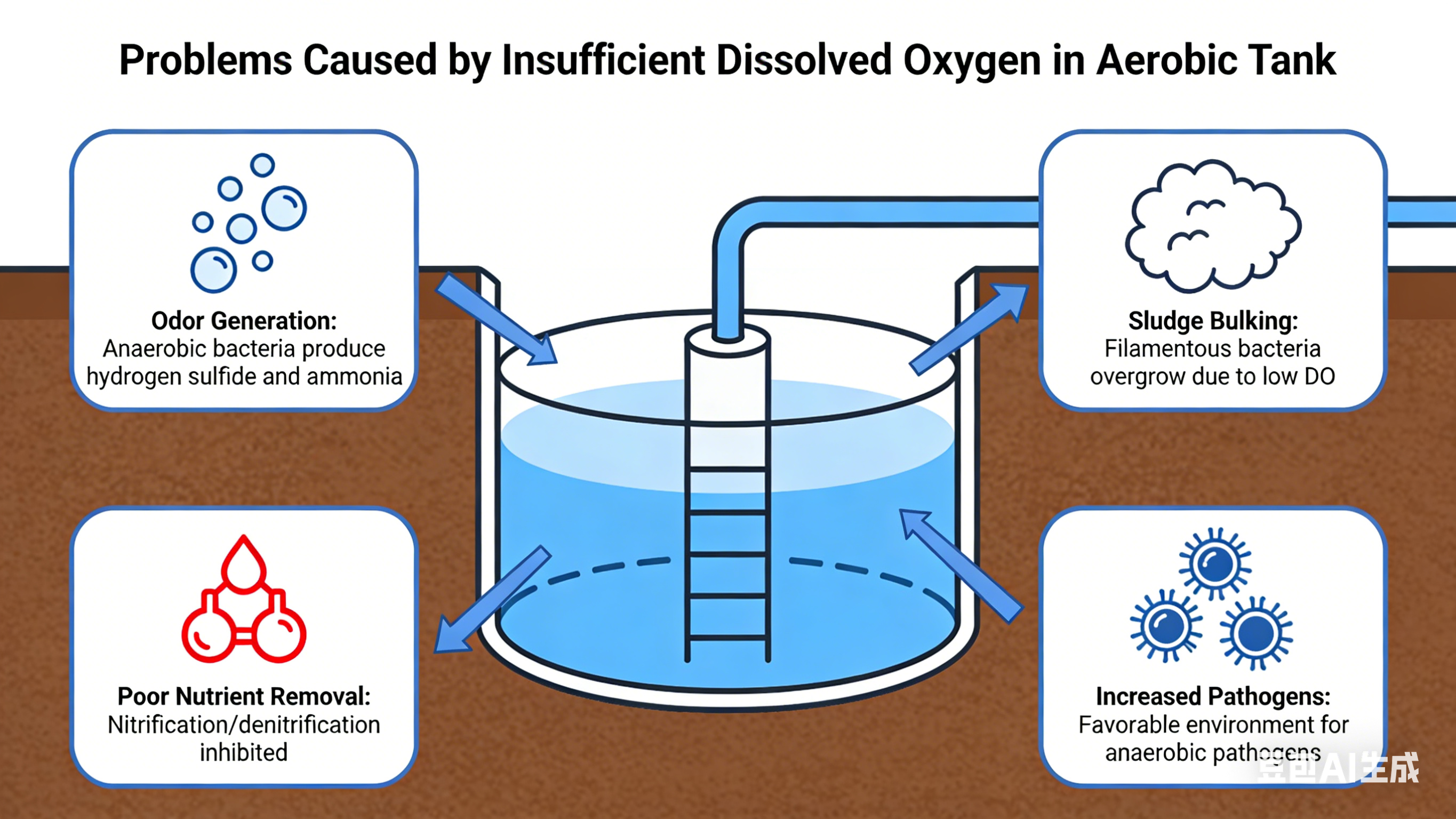
In aerobic tanks, microorganisms use oxygen as an electron acceptor to break down organic substances. Long-term insufficient DO limits microbial activity and slows down oxidation reactions. As a result, the removal efficiency of pollutants such as COD (Chemical Oxygen Demand) decreases, leading to poorer overall treatment performance and unstable effluent quality.
Low dissolved oxygen conditions may cause the formation and accumulation of sulfides and other reduced compounds in wastewater. These substances often generate unpleasant odors and putrefactive smells, negatively affecting the surrounding environment and plant operation conditions. Persistent odor problems are often a clear sign of inadequate aeration.
Activated sludge requires continuous oxygen supply to maintain healthy microbial growth. When DO is insufficient over a long time, sludge flocs may become smaller and darker, biomass concentration may decrease, and sludge activity may decline. This can result in poor settling performance and reduced solid–liquid separation efficiency in secondary clarifiers.
Long-term low DO levels can change the microbial structure in the aeration tank. Aerobic and nitrifying bacteria may be inhibited, while facultative or oxygen-tolerant microorganisms may increase. This imbalance reduces microbial diversity and weakens the biological treatment capacity of the system.
Insufficient dissolved oxygen often indicates poor oxygen transfer efficiency. When oxygen cannot be effectively transferred from air into the wastewater, contact between oxygen and organic pollutants is reduced, slowing down biological reactions and making process control more difficult.
Long-term insufficient dissolved oxygen in an aeration tank can significantly affect wastewater treatment efficiency, sludge performance, and operational stability. To maintain reliable treatment results, appropriate DO levels should be ensured based on wastewater characteristics and process requirements. Optimizing aeration intensity, improving oxygen transfer efficiency, and using well-designed aeration systems are key measures to prevent long-term low DO problems.


